
text and photos by Grace M. Avanzado
A walk through Cebu’s oldest district, where ancestral homes, small chapels, forgotten alleyways, and the echoes of the city’s earliest stories reveal a neighborhood still shaped by memory, movement, and the quiet resilience of its people.
I was in high school when the book Life in Old Parian by Concepcion G. Briones was published. My mother insisted I read it, believing it was important for me to understand why this district deserved its place in Cebu City’s history. Initially a settlement for Chinese traders, Parian evolved into a residential and commercial hub for Chinese mestizos and their families. In Cebuano, pari-pari means to barter or trade. Out of this, the district of Parian was born and named.
Heritage of Cebu Monument
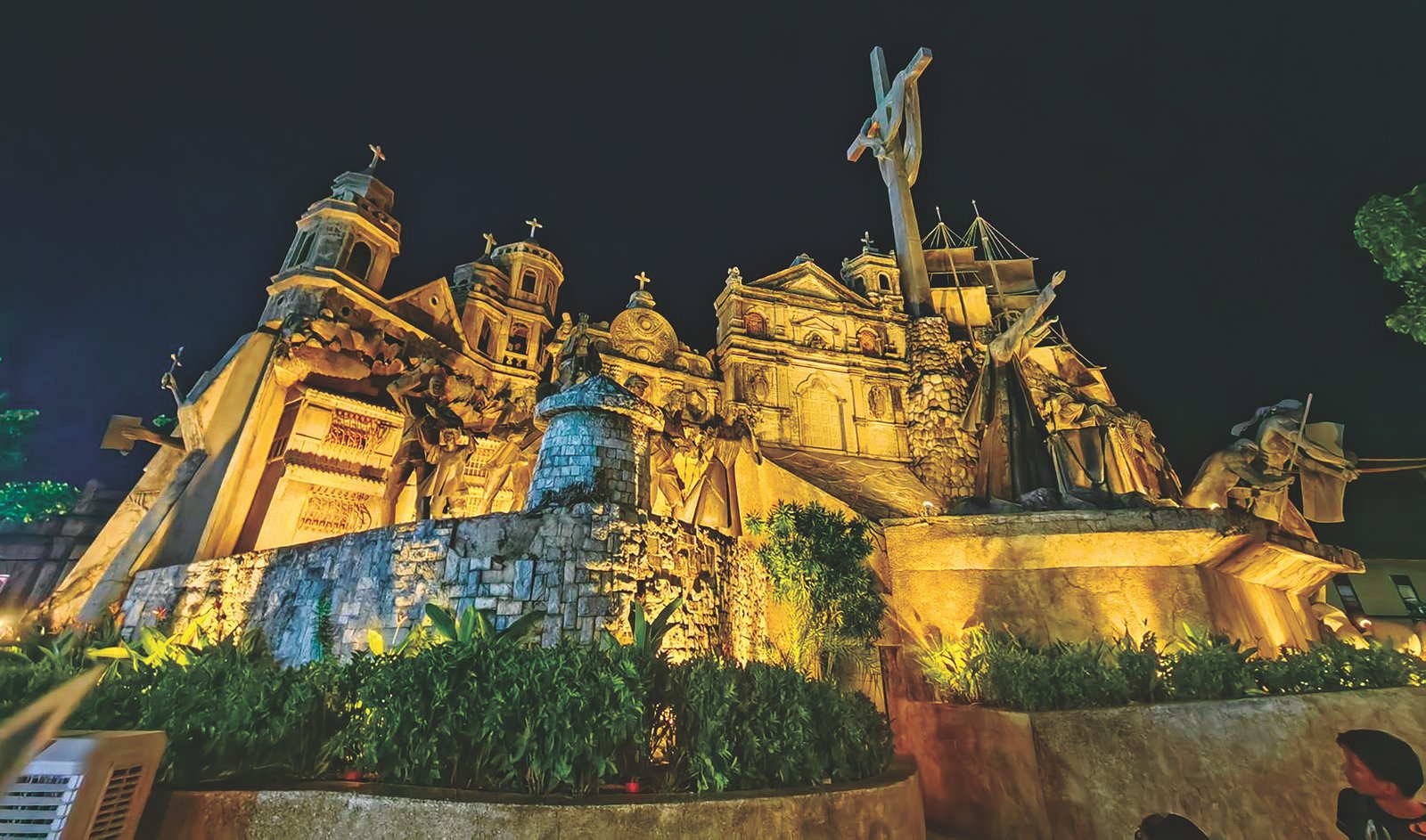
More than a century after the destruction of most of Parian’s historic structures, remnants of the past remain. The most striking is the Heritage of Cebu Monument, a massive tableau sculpted over three years by renowned artist Eduardo Castrillo, with architects Heradio Español and Ildefonso Santos.
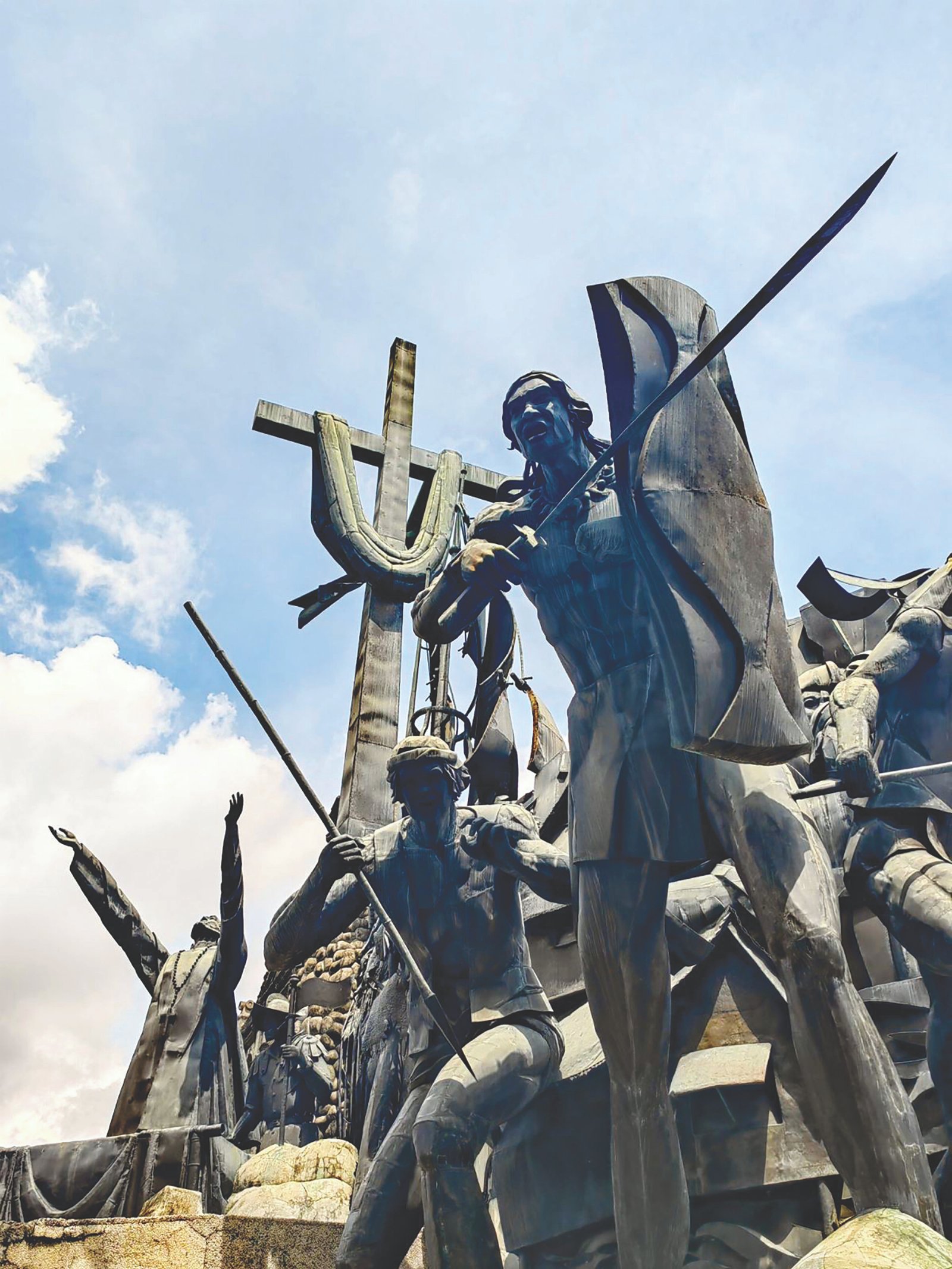
Made of concrete, brass, bronze, and steel, the monument is best viewed both from afar and up close. Walking around it, I trace scenes from the Battle of Mactan to the beatification of Saint Pedro Calungsod in 2000. The three churches sculpted side by side— the Basilica Minore del Sto. Niño, the Metropolitan Cathedral, and the former parish of St. John the Baptist anchor the tableau. The latter was demolished in 1878, and its remnants are now housed at Museo Sugbo.
Other details depict the inauguration of President Sergio Osmeña, the baptism of Rajah Humabon and his tribe, the Sto. Niño procession, a Roman Catholic Mass, a Spanish galleon, and other pivotal moments in Cebu’s history.
Parian Fire Station
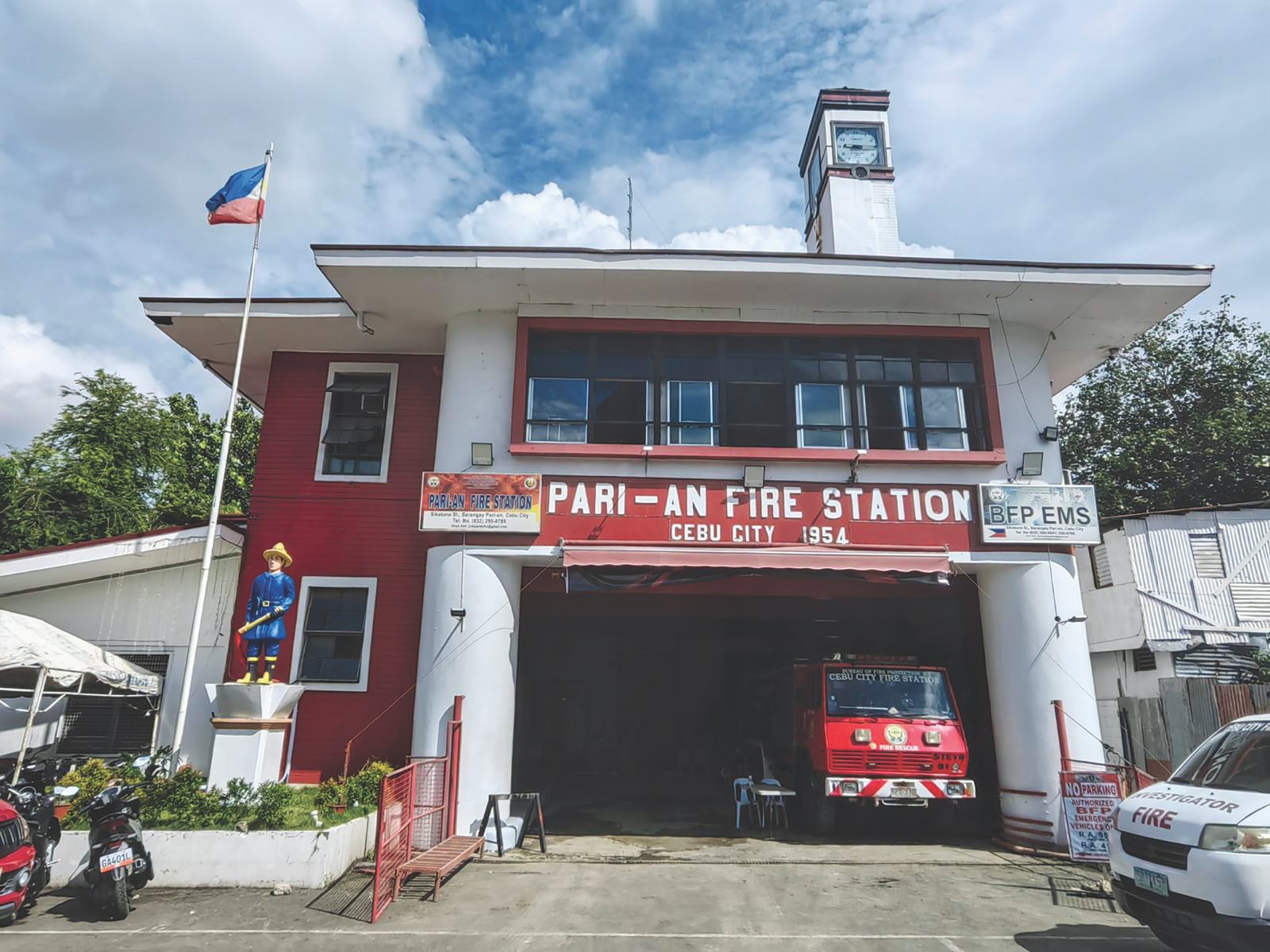
Behind the monument stands the Parian Fire Station, the second-oldest functioning fire station in the country. Its renovated clock tower was unveiled in February 2025. History tells us the fire station was once the convent of St. John the Baptist Church. Bombed during World War II, it was rebuilt in 1954. Beside it, a small chapel named in honor of the former church still hosts occasional masses.
Echoes of Tojong Hospital
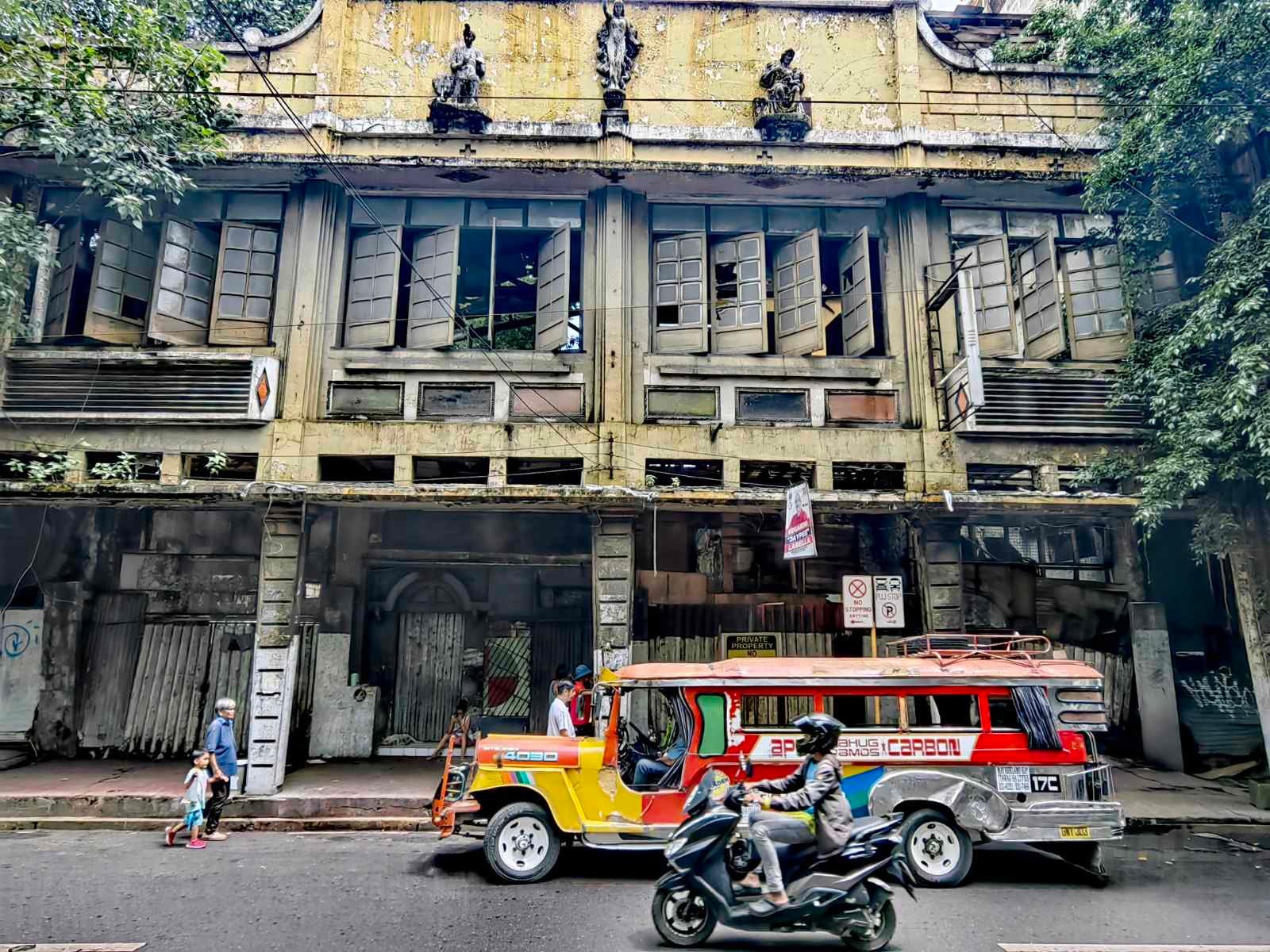
A few blocks away, I encounter what remains of the Tojong Maternity and General Hospital, built in the 1950s and closed in 1997. Its façade, marked by medical-themed statues, reveals that this was no ordinary hospital. The design reflects the vision of Dr. Leonardo Tojong, physician, soldier, politician, and a man with an eye for artistry.
Colon Street and Its Obelisk
At the intersection of Colon and P. Burgos Streets rises the Colon Obelisk, built in 1961 by the National Historical Institute (now NHCP). It commemorates Colon Street, long regarded as the oldest street in the Philippines. Though disputed today, Colon—laid out in 1565 under Miguel Lopez de Legazpi— remains the first planned street of Cebu’s Spanish settlement.
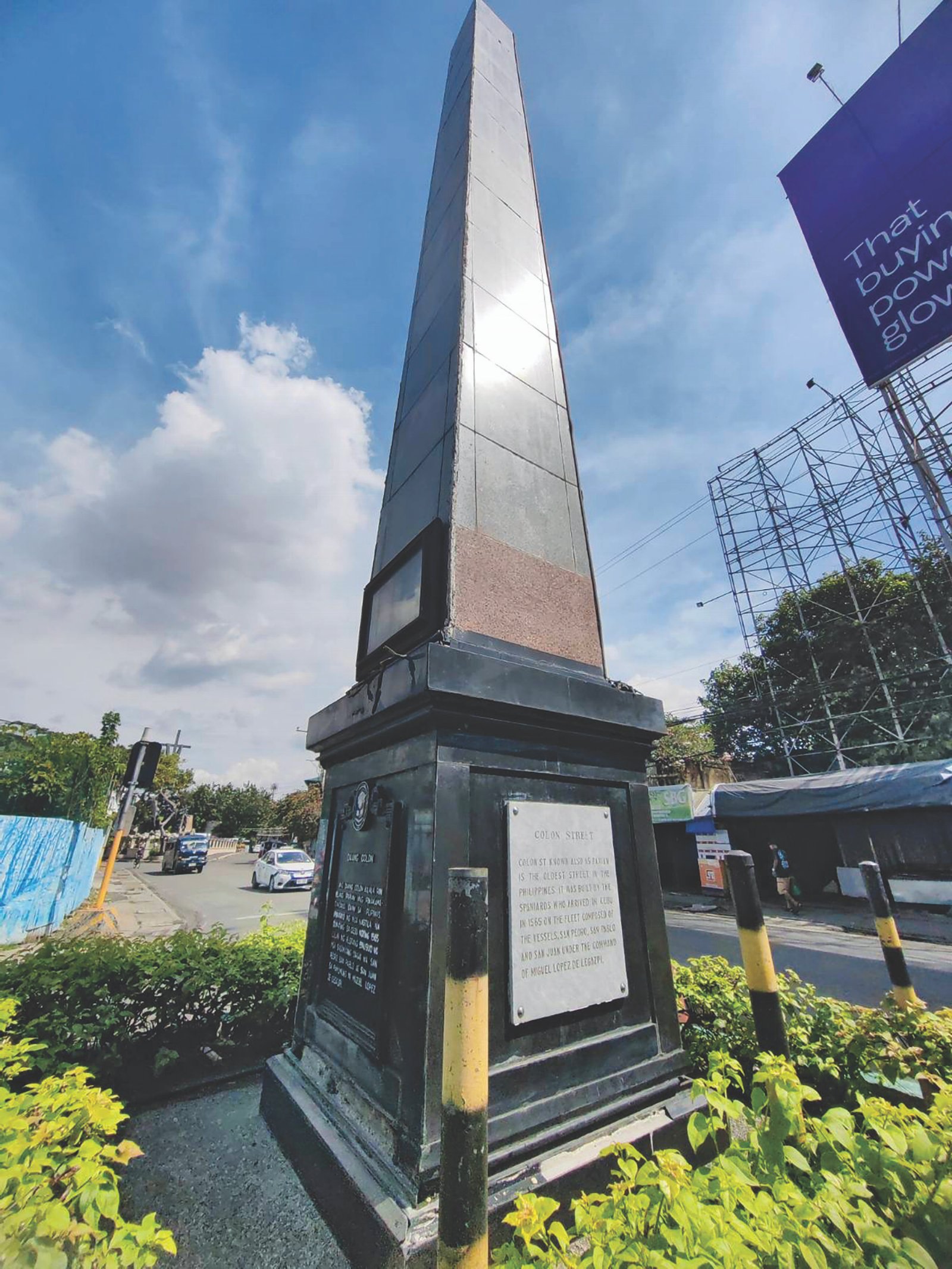
Colon once bustled with establishments like the Happy Emporium Department Store and Rosita’s Bazaar, places I likely visited as a child. The University of the Visayas, the first in Cebu to gain university status in 1948, moved to its prime location in Colon in 1947.
Honoring Roots
As a proud Cebuana born, raised, and living in Cebu, I honor my roots by revisiting how this thriving community from the past shaped the present we live in today.
Flipping through the pages of Life in Old Parian, I smile at the family names. I can trace an ancestor or two among those who once thrived here. With Cebuana pride, I salute you, Parian. Keep your heart beating, reminding us all of your treasured place in the history of our beloved Cebu City.